
What if cities communicated like public companies?
The case for a citizen relations department

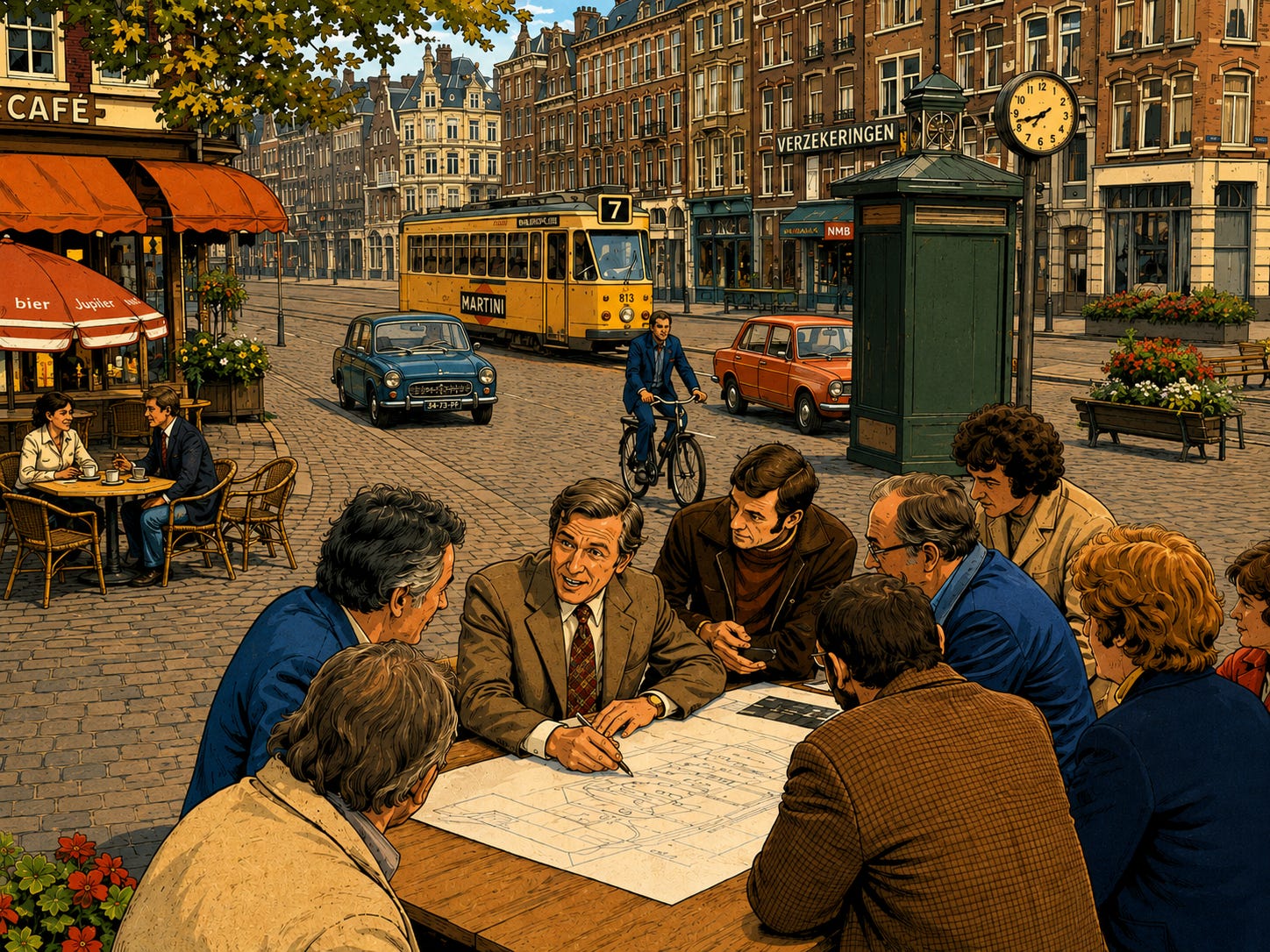
Imagine opening your laptop one evening to join your city’s quarterly call. The mayor is on screen. The city CFO sits beside her. The first slide shows the budget and how it has been deployed this year. The second shows delayed housing projects. The third tracks air quality, school results, commute times and crime. And the fourth presents the outcome of projects citizens of the city voted on earlier. At the end of the call, everyone can ask questions live.
For most citizens, this would feel almost unimaginable. Yet this is the bare minimum we expect from a public company we invested fifty dollars in.
Most cities still communicate in fragmented and bureaucratic ways. Important updates are generally scattered across press releases, PDFs, local media interviews or are buried under text-heavy council websites. Feedback loops are generally weak or non-existent, and where they do exist, public participation is low. If a publicly listed company communicated this poorly with its shareholders, it would risk regulatory scrutiny, angry investors, and most likely a valuation discount…
I think the parallel between a listed company and a city is somewhat deeper than it may first appear. In a company structure, the CEO sets strategy, executives execute it, and the board provides oversight. Shareholders provide capital and in return expect communication, accountability and return on investment. In a city, the mayor sets strategy, city council provides oversight, taxpayers provide capital, and citizens expect safety, infrastructure, mobility, affordability and good or improving quality of life. Yet communication around those issues by those in charge is random and scarce. Citizens receive whatever the city decides to tell them, when it decides to tell them.
The analogy is of course far from perfect… Citizens of a city are not shareholders. While a shareholder can sell stock if they lose confidence in management, a resident cannot easily move away from their job, family, school, home and community. Companies also have a clearer operational objective: creating long-term shareholder value. Cities have multiple, often competing goals centred around democracy: growth, affordability, safety, sustainability, mobility, culture, inclusion and social welfare. What looks efficient from one perspective may look deeply unfair from another.
And unlike a company, a city cannot simply optimise for its most powerful stakeholders. The people most affected by poor services may be the least likely to attend meetings, read dashboards or submit feedback forms. So the “citizens as shareholders” analogy cannot be taken too literally, and that’s not the point I am trying to make. Having said that, cities can borrow the communication discipline of public companies: regular reporting, measurable targets, plain-language updates, visible accountability and an open dialogue with the people who live with the consequences of their decisions.
If cities adopted even part of this mindset, a few interesting things might happen:
Firstly, cities would be pressured to articulate an actual long-term strategy with measurable milestones and timelines attached to it. Many vague mission statements would quickly collapse under scrutiny. To create such a good strategy, mayors would actively solicit feedback and understand what citizens value most.
Secondly, reporting and engagement activities would improve. We could brainstorm and imagine this taking many forms;
City Annual Report: A straightforward letter from the mayor, written in plain language and in his/her words, combined with measurable KPIs: housing starts, air quality, commute times, crime, school performance, infrastructure delivery and budget deployment.
Strategy Day: An annual public presentation of a five-year city vision with milestones, project updates and introductions to department heads responsible for execution. Citizens could see 3D models of projects, review timelines and directly meet developers, architects or contractors involved.
Regular Update Calls: Quarterly updates discussing delays, overruns, completed projects and operational metrics, followed by live Q&A sessions and newsletters for residents unable to attend the calls.
“Citizen AGMs”: Physical town hall meetings where residents can vote, ask questions and provide structured feedback on major initiatives. Could be organised part of the Strategy Day.
Real-Time City Dashboards
Live public dashboards showing key metrics across transport, housing, permitting, crime, pollution, budgeting and infrastructure delivery. Maybe even part of a website “cr.cityname.com”.
Thirdly, accountability would become harder to avoid, not only for the mayor, but across the entire administrative chain. One of the underrated strengths of capital markets is that they force organisations into regular cycles of explanation and measurement. Cities lack this rhythm.
And fourthly, I suspect quality of life would rise a little bit. People would simply enjoy living in places where they feel informed and heard. Better communication won’t magically fix housing, transport or public services, but it could reduce the feeling that decisions are being made somewhere else, by people no one can question. People might just tolerate a bit more the short-term struggle of a noisy nearby project if they see the big picture.
Parts of this idea already exist. Boston’s CityScore publishes performance metrics across resident service requests, emergency response, crime trends, potholes, trash collection, permitting and satisfaction surveys. Participatory budgeting already exists in many places. Warsaw, for example, explicitly lets residents propose projects and vote on which ones receive funding from part of the city budget. Many mayors use social media very actively to communicate updates and interact directly with residents.
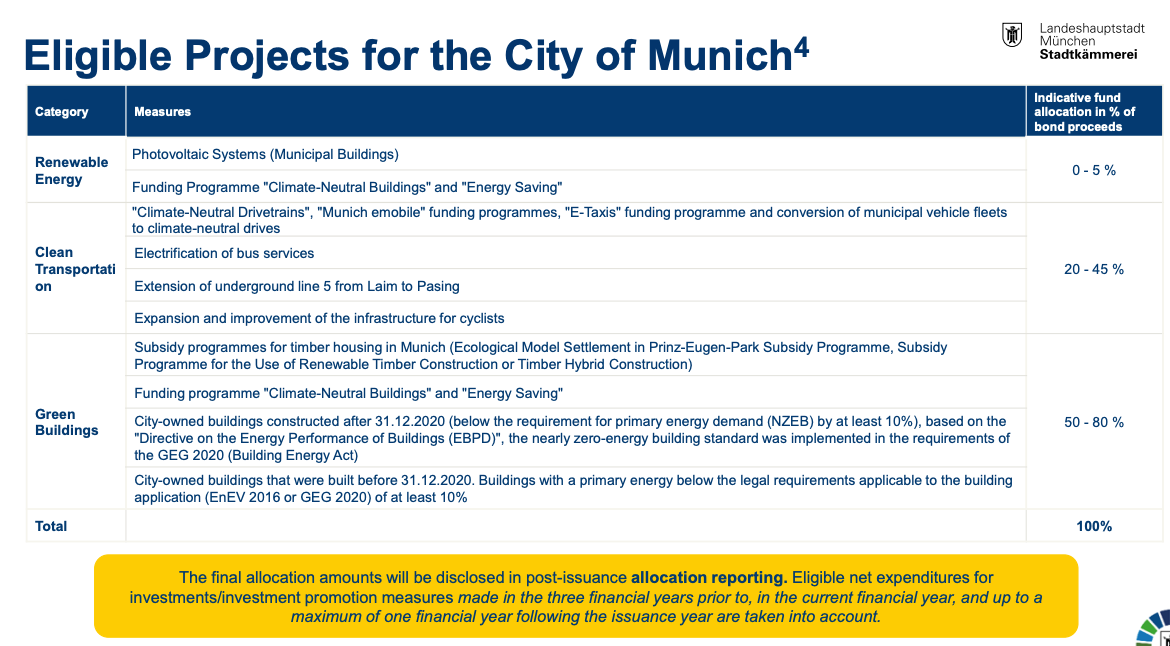
Munich has shown how cities can also enter the capital markets directly. Its ‘Munich city bond’ is an example of municipal finance becoming available to the public, including its own residents.
It is not hard to imagine Munich coming up with annual citizen-style reporting: what was funded, what was delayed, what changed, and what impact was achieved. Its bond prospectus presentation is already laying the groundwork for this:
So while some of those ideas are already here, they exist in fragments. They are rarely brought together into a coherent communication function with a consistent rhythm and a single narrative about where the city is going. What is missing is a proper citizen relations function inside city hall, in the same way as public companies have investor relations departments. One team responsible for making sure the city speaks clearly, reports regularly, listens systematically and connects strategy, budget, projects and public feedback into one joined-up conversation.
And there are probably good reasons why this has not happened yet. Cities are genuinely complex, they move slower than companies, operate under political constraints and must balance competing interests in ways corporations do not. A big part of the reason is also cultural. A friend of mine who works in a city council put it this way: we have collectively accepted the idea that cities are simply too bureaucratic, political, and complicated to come up with fresh ideas.
However accepting all of this is a missed opportunity. Whether they explicitly admit it or not, cities are locked in a constant global competition for talent, investment, events, entrepreneurs, and families. In a mobile world, a “citizen relations” function could be a powerful competitive advantage. The municipalities that offer transparency and genuine dialogue will become the places where people actually want to anchor their lives and capital.
All the precedents already exist; and maybe the time has come for forward-thinking mayors to treat their residents not just as taxpayers, but as their most valuable investors!